Follow research releases, workshops, presentations, visitors, and student achievements from SEEM.
2026
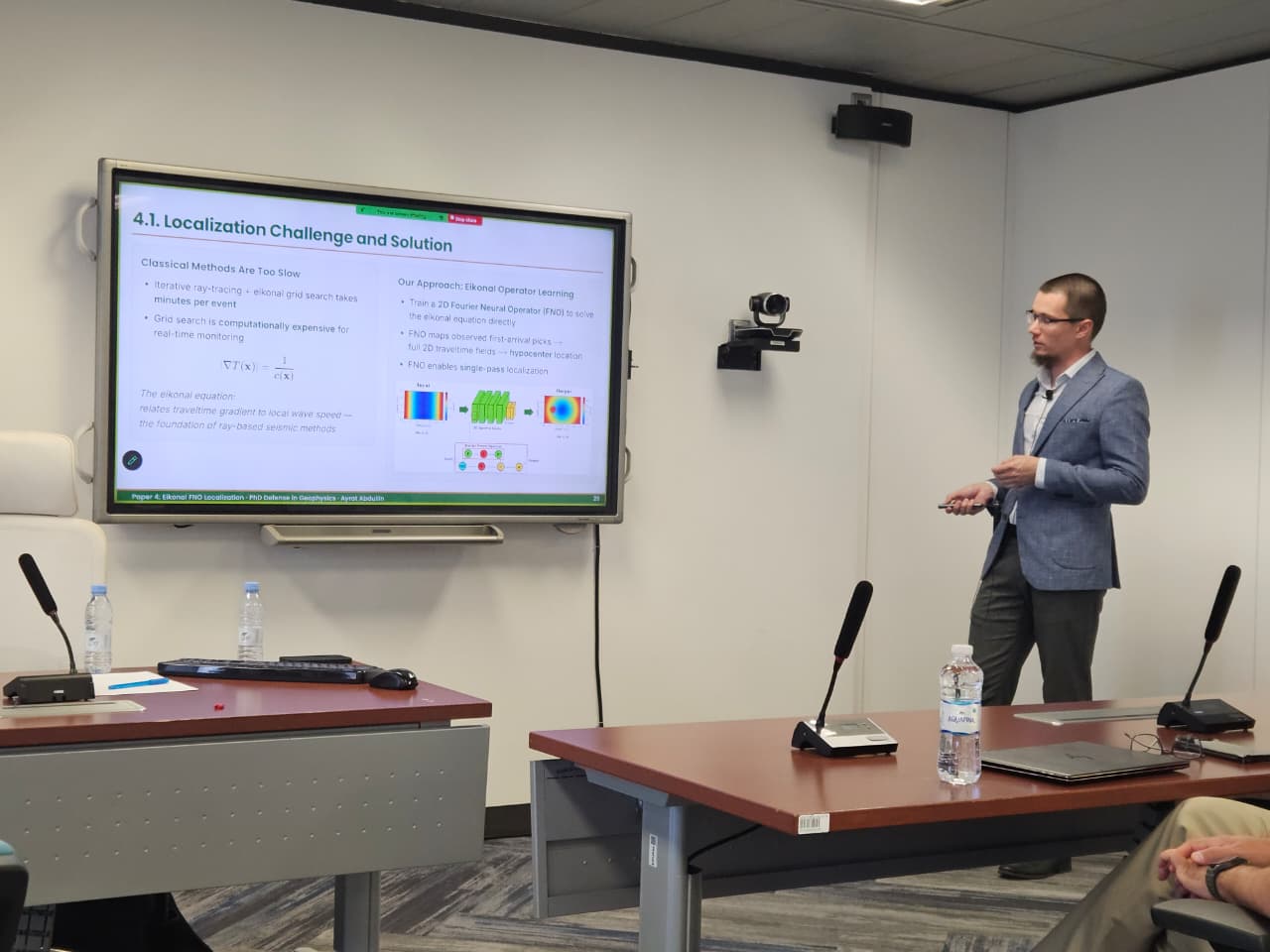
PhD candidate Ayrat Abdullin defends his dissertation, a compilation of five research papers on deep learning for real-time microseismic monitoring, advised by Dr. Umair bin Waheed.
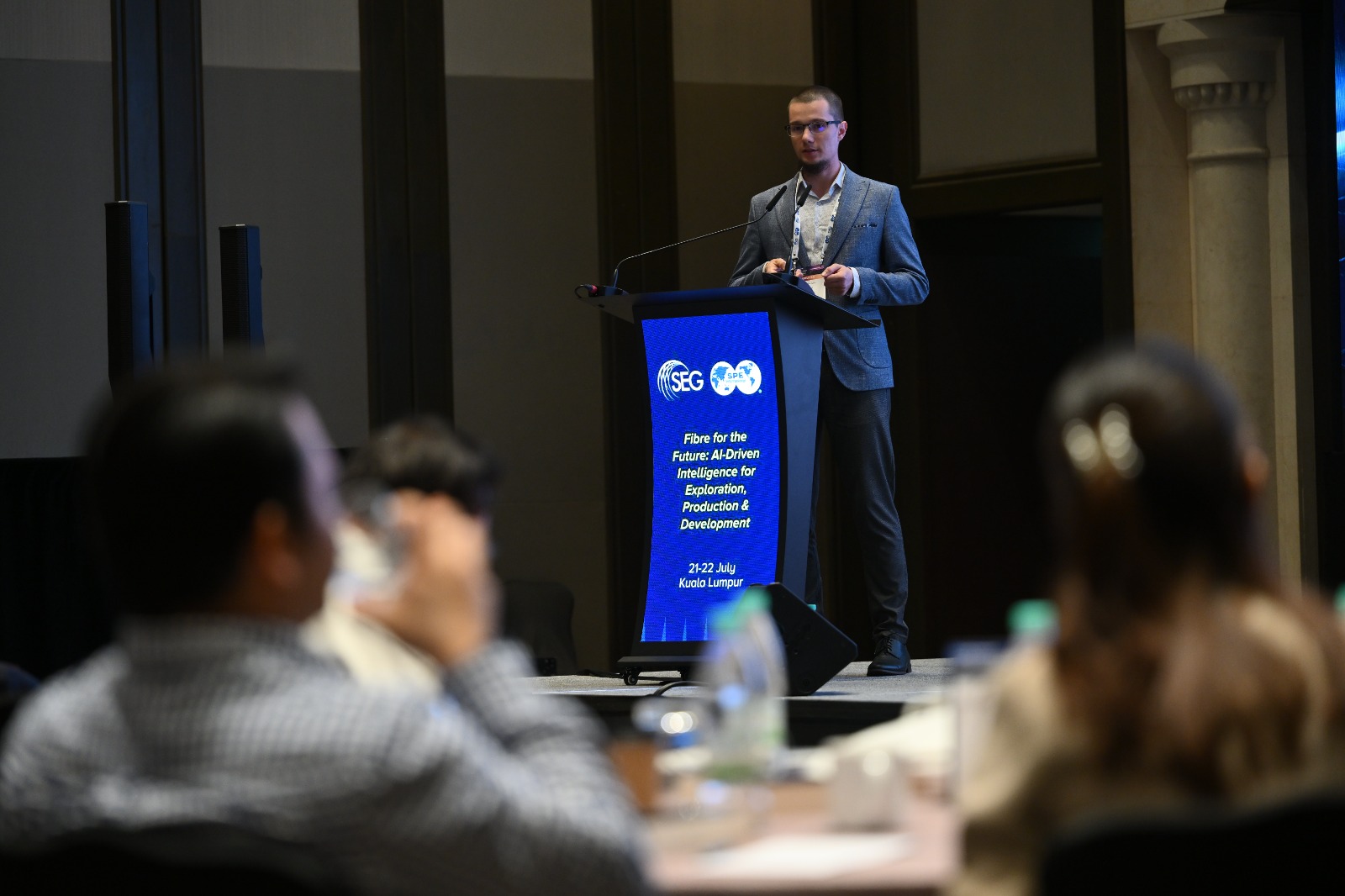
SEEM PhD student Ayrat Abdullin presented neural-network approaches for reconstructing high-resolution DAS sensitivity maps.

An invited seminar and technical discussions explored diffusion-based inversion and the next generation of GeoSIRR.
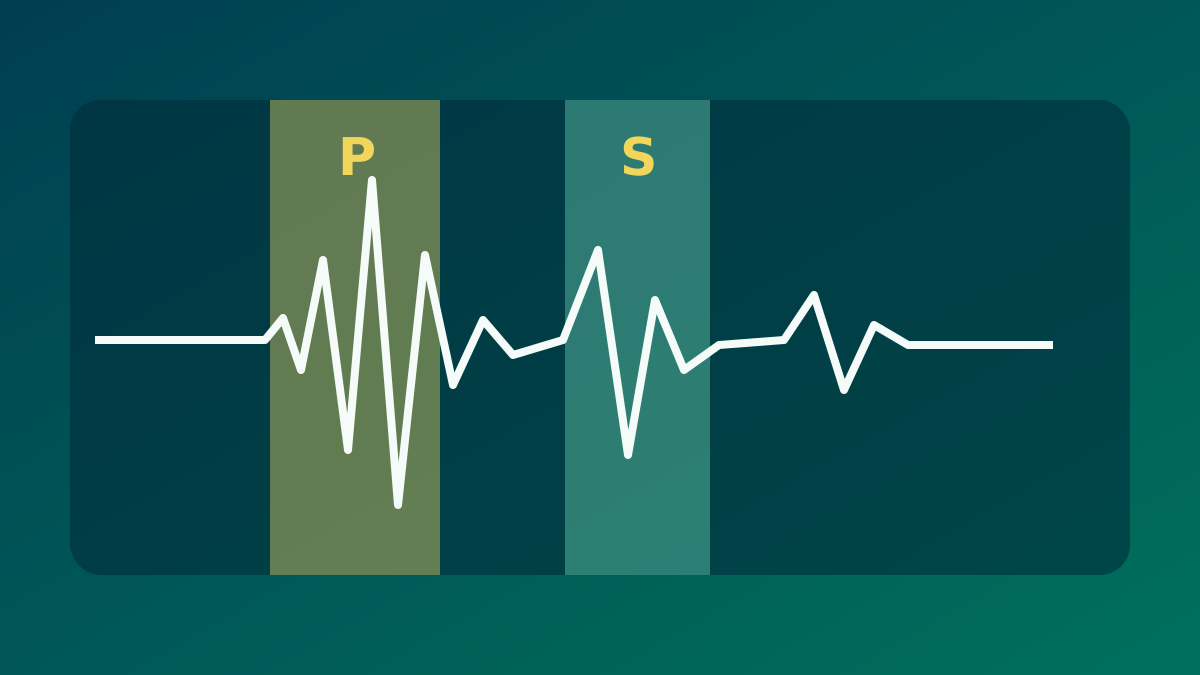
The study uses Grad-CAM and SHAP to interpret PhaseNet and improve the robustness of microseismic-event detection.
An invited seminar connected advances in seismic imaging, neural operators, diffusion models, and microseismic monitoring.
A new model of the South China Sea links lithospheric density and temperature contrasts to plume–ridge interaction.
Students used coding agents to turn research ideas into structured mini-projects while learning to review generated code critically.
GeoSIRR turns natural-language geological descriptions into validated cross-section models that can be refined through conversation.
A published IMAGE 2025 expanded abstract evaluates how retrieval and prompt design can support users of complex geoscientific software.
Prof. Hans-Jürgen Götze visited CPG and joined SEEM discussions on integrated 3D gravity modeling and generative AI.
2025
Two invited seminars explored generative AI for seismic imaging and machine learning for microseismic analysis.

An invited technical presentation examined intelligent, adaptive, and interpretable AI workflows for passive seismic monitoring.
Dr. Daniel Wamriew of KAUST visited SEEM to discuss waveform-based generative methods for locating microseismic events.
No matching items